

Build narrow, launch wide
Stilla spent eleven years building a digital PCR platform and had three months to launch nio+. The product launch strategy behind it: narrow the segments, then widen the campaign.

Two speakers opened the first Ooho Connect. One had spent eleven years building a digital PCR platform. The other had three months to run its product launch. Both talks landed on the same discipline: deciding what not to do.
⎯⎯⎯⎯⎯⎯⎯⎯⎯⎯⎯⎯⎯⎯⎯⎯⎯⎯⎯⎯⎯⎯⎯⎯⎯⎯⎯⎯⎯⎯⎯⎯⎯⎯⎯⎯⎯⎯⎯⎯⎯⎯⎯⎯⎯⎯⎯⎯⎯
Rémi Dangla founded Stilla Technologies in 2013, straight out of a PhD in microfluidics. Thibault Vandenhove, Ooho co-founder, ran the commercial launch of Stilla's nio+ instrument a decade later. The two talks were built separately and converged anyway. What follows is the product launch strategy case study they add up to.
Rémi said it plainly: inventing products and selling products are two different jobs. He is a physicist by training, and he was direct about the learning curve. He got good at the first job first, then spent years getting less bad at the second.
That gap is where life sciences companies lose the most time. The science works, the data holds up, and the instrument does what the specification says. The commercial engine just does not exist yet. Building one is a different discipline from building the product it has to sell.
Eleven years, three generations, one rule about scope
By the time Rémi presented, Stilla had raised around €80 million and shipped three generations of digital PCR systems. Roughly 400 customers now run them across Europe, the US and Asia. The first product took three years to reach market. He credits one rule for keeping it to three.

Build only what is critical and unavailable. Buy everything else.
A digital PCR system has a lot of moving parts: the instrument, the microfluidic chip, the reagents, the optics, the analysis software. Stilla built very few of them. The microfluidic chemistry was the actual invention. Nobody else in the world knew how to do it, so the team built that in-house. The chip got the same treatment, because it had to plug into an instrument that did not exist yet.
PCR reagents went the other way. PCR chemistry was already solved, so Stilla screened what was commercially available, tested each option in their own system, and kept whatever worked. Thermal cycling and the fluorescence reader came off the shelf on the same logic. On software, the team wrote the analysis layer and bought the acquisition layer.
Two questions per component. Is it critical, and does it already exist? Build where the answers are yes and no, and buy everywhere else.
Three years, not ten.
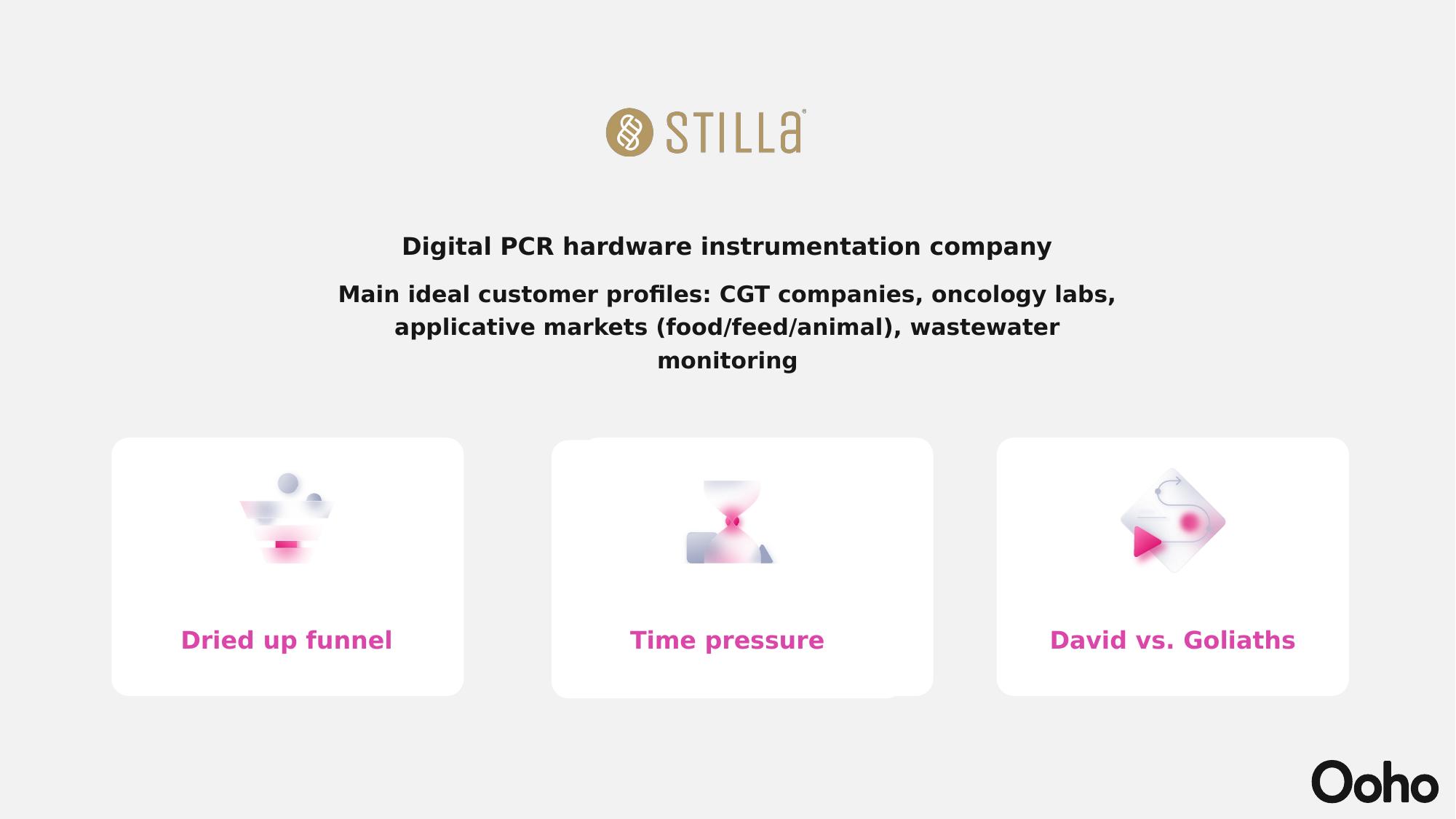
Narrow the strategy, then widen the campaign
Summer 2023. Stilla had a seven-channel instrument that outperformed the field, a launch date in November, and very little else. There was a device and an instruction manual. There was no launch collateral, and years of reduced marketing spend had thinned the contact database. Competitors with far larger budgets were pushing hard in the same accounts.
Then there was the timing problem, which is the one people underestimate. Launching in Q4 means launching into the middle of your customers' CAPEX cycles.
Our product launch strategy runs in four quadrants. The top half is strategy: segment the market, then fix positioning and messaging. The bottom half is execution: product marketing first, campaigns second.
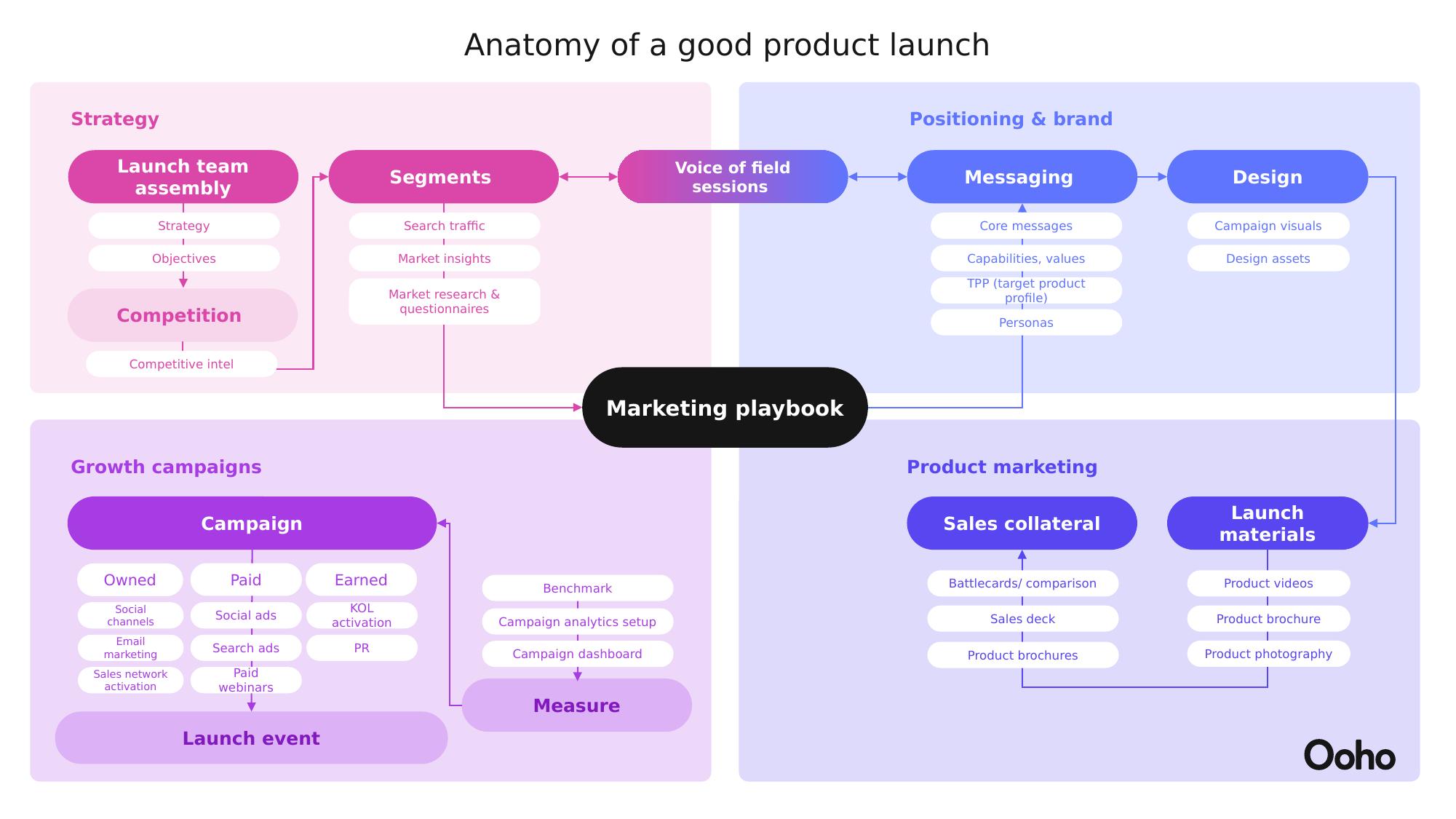
Digital PCR reaches diagnostics, research, quality control and pharmaceutical manufacturing, and nobody wins all of that in three months. So the segmentation narrowed hard, down to oncology and cell and gene therapy, aimed squarely at biopharma.
Then the direction reverses. Strategy narrows, campaigns go wide. Once the audience is fixed, you activate every channel it already uses. That meant outbound, inbound, paid newsletter placements and KOL relationships, plus the personal LinkedIn presence of every salesperson on the team.
Between the two halves sits a capability matrix. We mapped each of the instrument's capabilities against the specific pains of each segment, so the pitch changes with the room. A cell and gene therapy scientist needs different specifications foregrounded than a liquid biopsy lab does.
The teaser campaign targeted budgets, not awareness
By Q4, next year's CAPEX is already allocated. An instrument that shows up in November is an instrument that missed the window, which meant the pre-launch sequence had one narrow job: make buyers hold budget.
We built it around numbers. Seven, then eight, then 384. Each one a specification, none of them naming the product. Forty assets went out in under thirty days. The first teaser was a video. The second was cut from early access footage of real users running the instrument in their own labs.
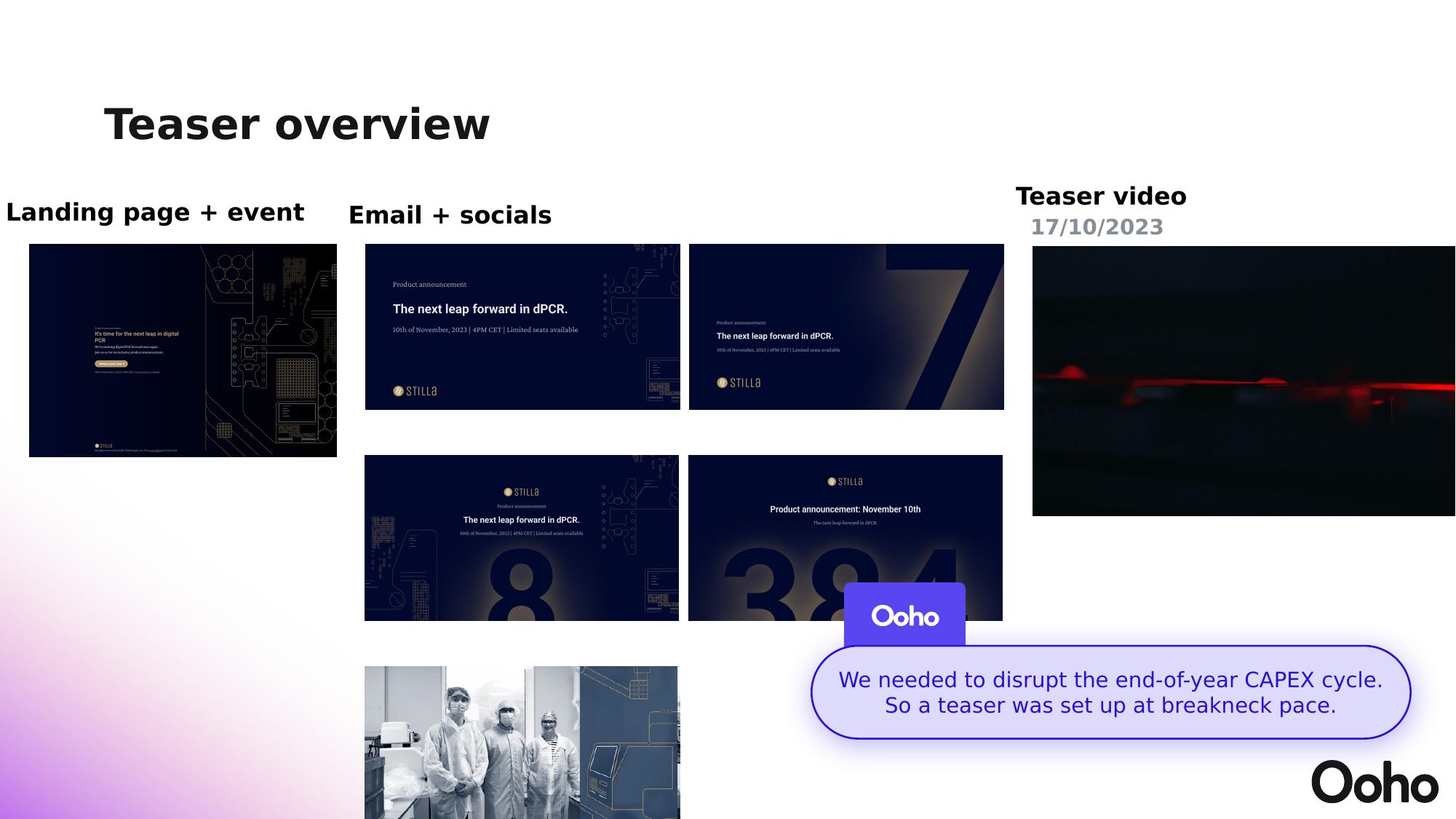
Those early access programs did three jobs at once. They put the instrument in front of scientists for hands-on demos, generated the application data the launch needed, and activated KOL relationships in the process. The device was strong enough that our job on camera was simple. Put users in front of it and ask the right questions. A crew of two shot both testimonials in two days, across Rennes, Charleroi and Ghent.
What the product launch strategy produced
The launch itself was a 30-minute digital event. Rémi opened it, and the Stilla team walked through how the instrument works. Clips from that recording still train new customers today.
1,250 people registered.
Volume like that creates its own problem, because a registration list is worth nothing without follow-up that earns a reply. So we ran AI enrichment across the registrant list, pulling not just role and company but the research each person actually publishes. One contact works on AAV characterisation. Another tracks ESR1 mutations to monitor disease progression in liquid biopsy.
That specificity is what makes personalisation real. Follow-ups referenced the actual work, then ran through multichannel sequences combining email and LinkedIn.
The campaign generated over €10 million in pipeline, and deals from it have closed since. In February 2025, Bio-Rad announced a binding offer to acquire Stilla in a deal worth up to $275 million. The launch was one chapter in a much longer build.
Hire for the gap, not the role
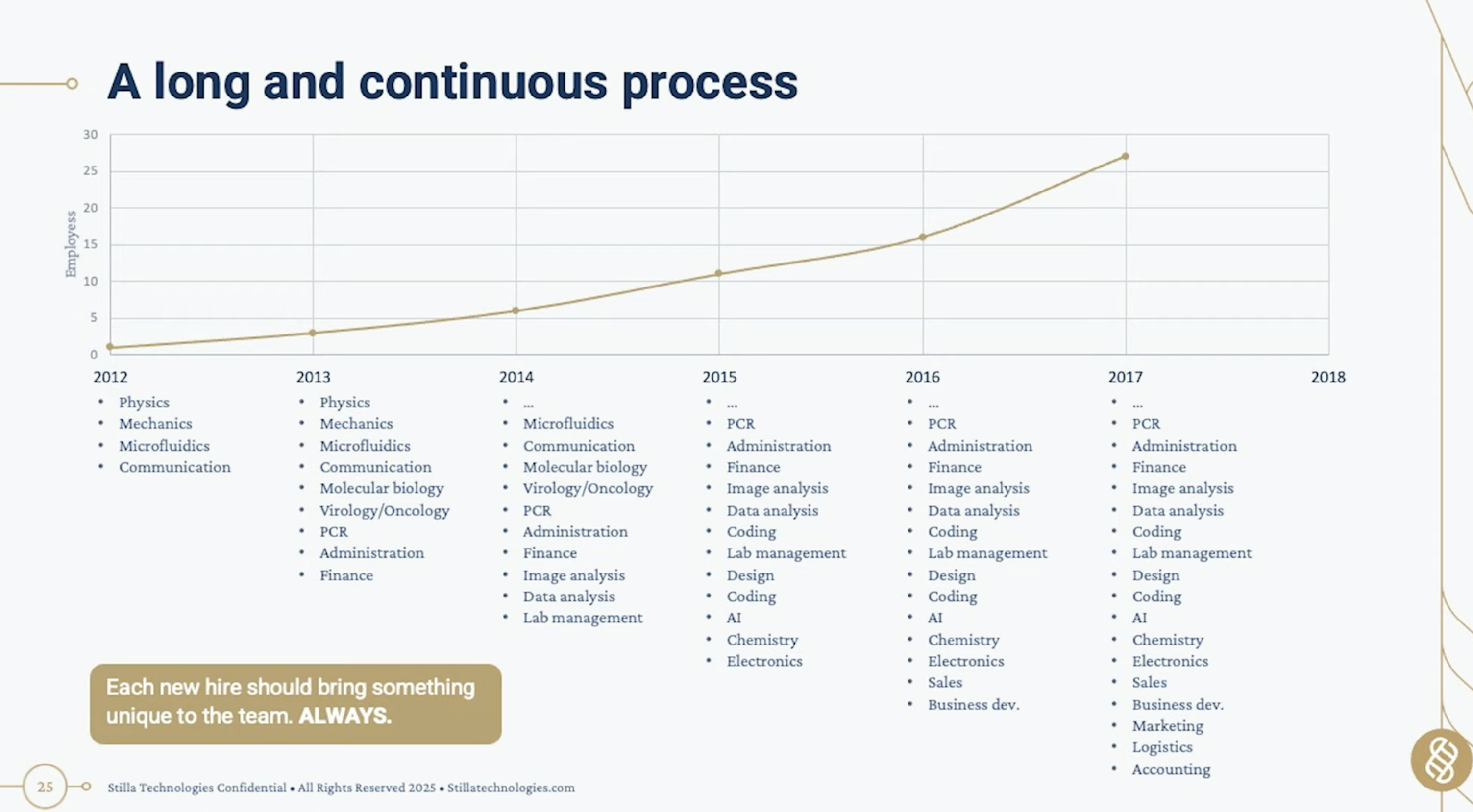
Rémi's second lesson is about people. It has exactly the same shape as the first. Every hire got one question: does this person bring something the company does not already have? He mapped the skill coverage of the entire team onto a single slide, then treated the blank space as the hiring brief.
Past 100 employees, the rule still holds. The 101st person has to add a capability the other hundred lack. Redundancy buys security, but it does not close gaps.
That is also the argument for how we are built. The people writing about your assay have run one. We pair scientists who have worked at the bench with marketers who have shipped campaigns, so you never spend the first quarter educating the agency.
Frequently asked questions
What is a product launch strategy?
It fixes who you sell to and what you say before any campaign runs. Ours has four parts: segment the market, set positioning and messaging, build the product marketing, then run campaigns across every channel the audience already uses.
How did Stilla segment the market for the nio+ launch?
Digital PCR reaches diagnostics, research, quality control and pharmaceutical manufacturing. The launch narrowed to oncology and cell and gene therapy, aimed at biopharma. A capability matrix then matched each instrument capability to the pains of each segment.
When should you launch a lab instrument?
Plan around your customers' CAPEX cycles. By Q4, next year's budgets are already allocated, so a November launch needs a pre-launch campaign that makes buyers hold budget. For nio+, a teaser sequence sent forty assets in under thirty days.
What did the nio+ launch produce?
The 30-minute digital launch event drew 1,250 registrants, and the campaign generated over €10 million in pipeline. In February 2025, Bio-Rad announced a binding offer to acquire Stilla in a deal worth up to $275 million.
Come to the next one
Ooho Connect runs again. If you are building in life sciences, medtech or diagnostics, and go-to-market now looks harder than the science, join us.
Or move sooner. Tell us what you are launching and when, and we will come back with the first ninety days mapped.
Curious about Ooho Connect 2025?
Watch the presentation recap with Thibault Vandenhove and Rémi Dangla.
Let’s get in touch.
We build brands that make your science impossible to overlook, and worth more once it’s understood. Let’s talk about your rebrand.