

Years in R&D. Six months to market. $5M pipeline.
How NanoMosaic launched its nanoneedle technology into gene therapy quality control.


A multi-phase launch that produced 1,030 campaign leads, 321 launch-event attendees, $5M+ in qualified pipeline and NanoMosaic's first three deals within six months.
A proven platform with no market to call its own
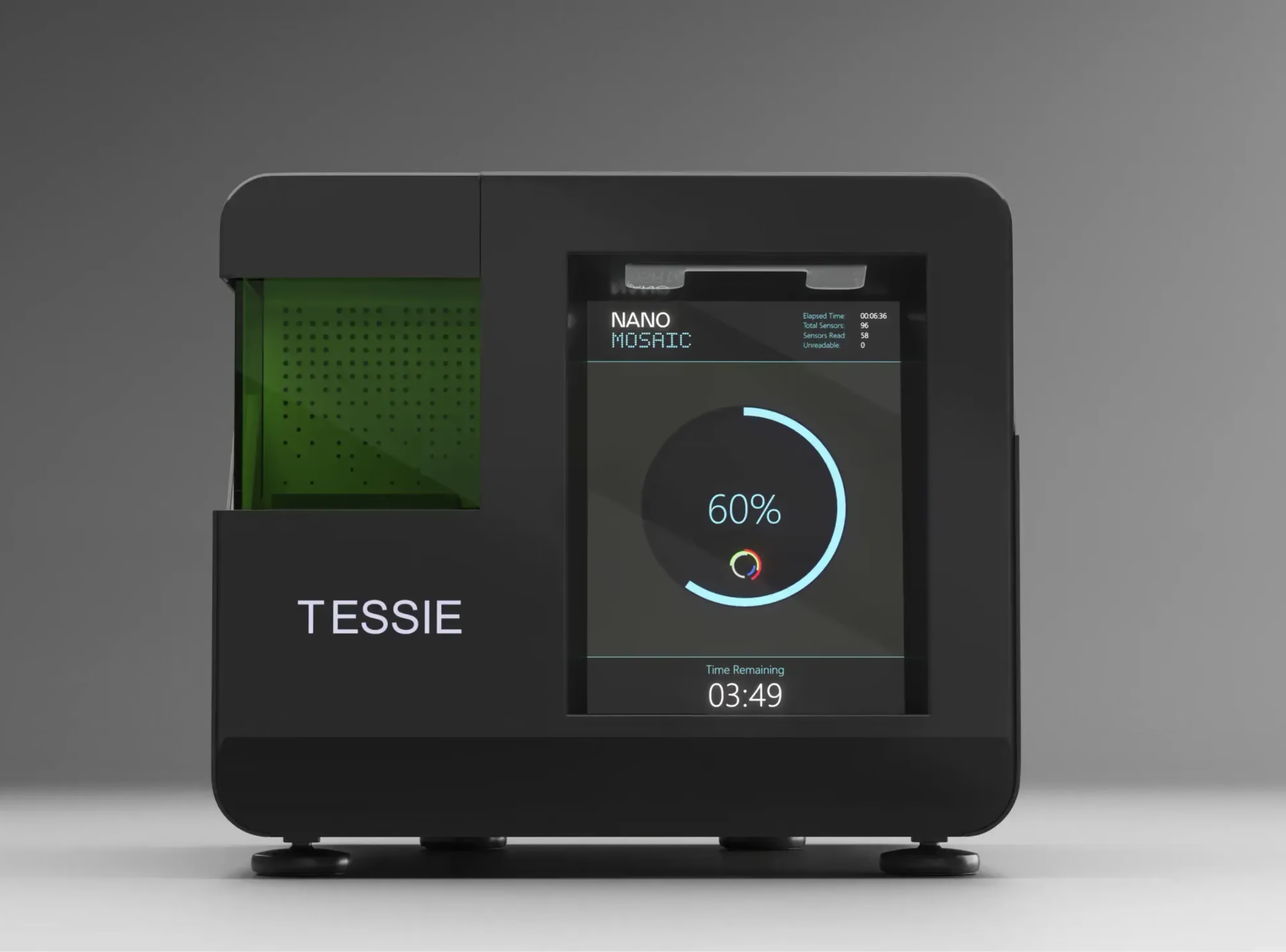
NanoMosaic’s nanoneedle technology started in 2012 in Dr. Qimin Quan’s lab at Harvard. Each needle is the size of a virus, so one platform can measure proteins, nucleic acids or whole viral capsids. By 2024 the company had a $40.75M Series A and more than 30 staff, but no commercial launch. It was spread across proteomics, neurology and cell & gene therapy, with no brand visibility, no lead pipeline and no clear message. A new CEO had one mandate: prove commercial traction, fast.
The opening was in AAV gene therapy manufacturing. Labs juggled up to eight analytical methods, each trading speed against accuracy or demanding purified samples. Nobody owned the answer to a simple question: how much of this batch carries the full therapeutic gene?
A gene therapy product launch in three phases
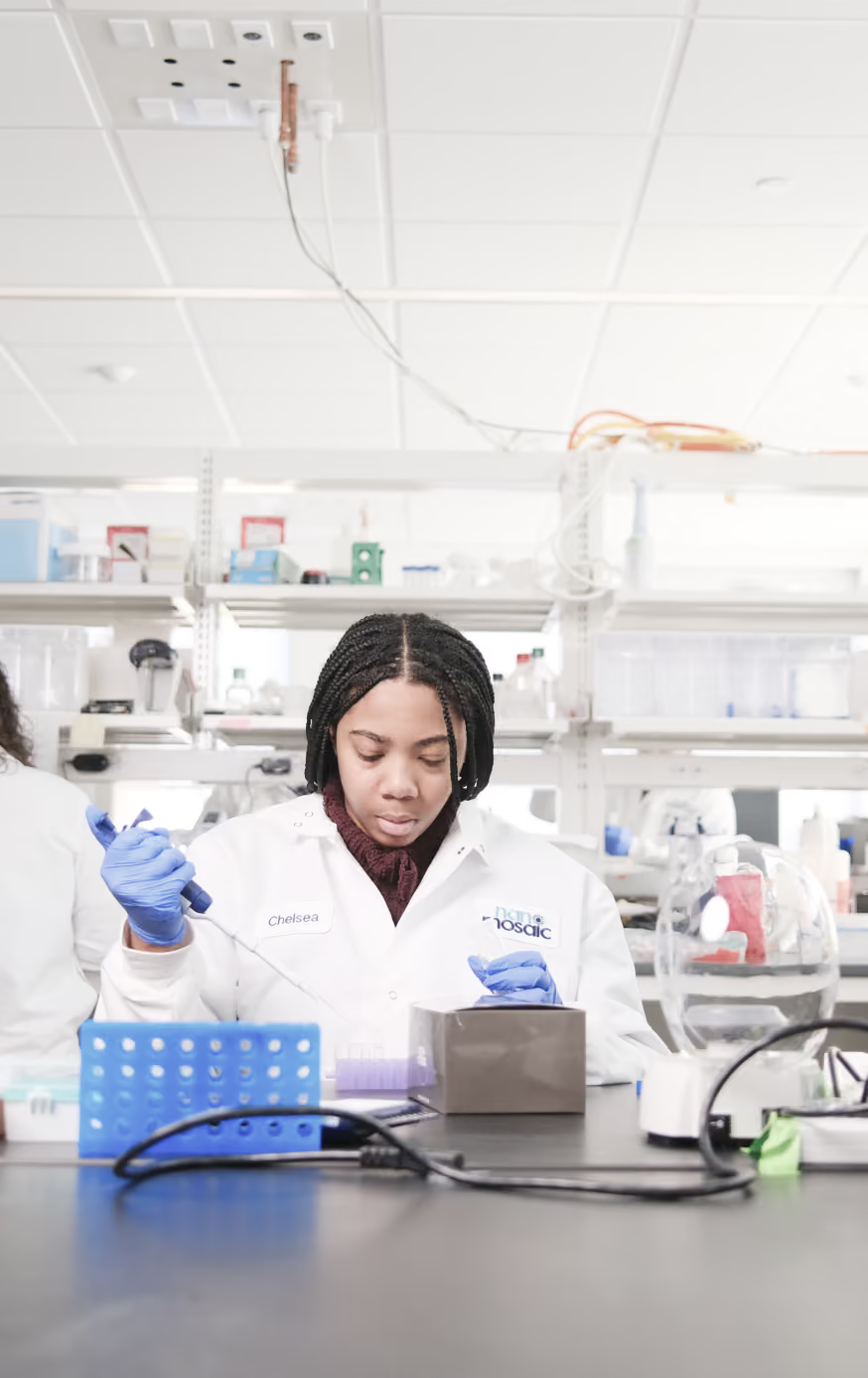
We started with a two-day workshop at NanoMosaic in January 2024 and left with a launch plan running four streams in parallel: brand, collateral, science and sales.
1. Pick one market and build the story for it
We narrowed the launch to a single category: AAV quality control for cell & gene therapy. Then we rebuilt the message around what a process scientist checks first.
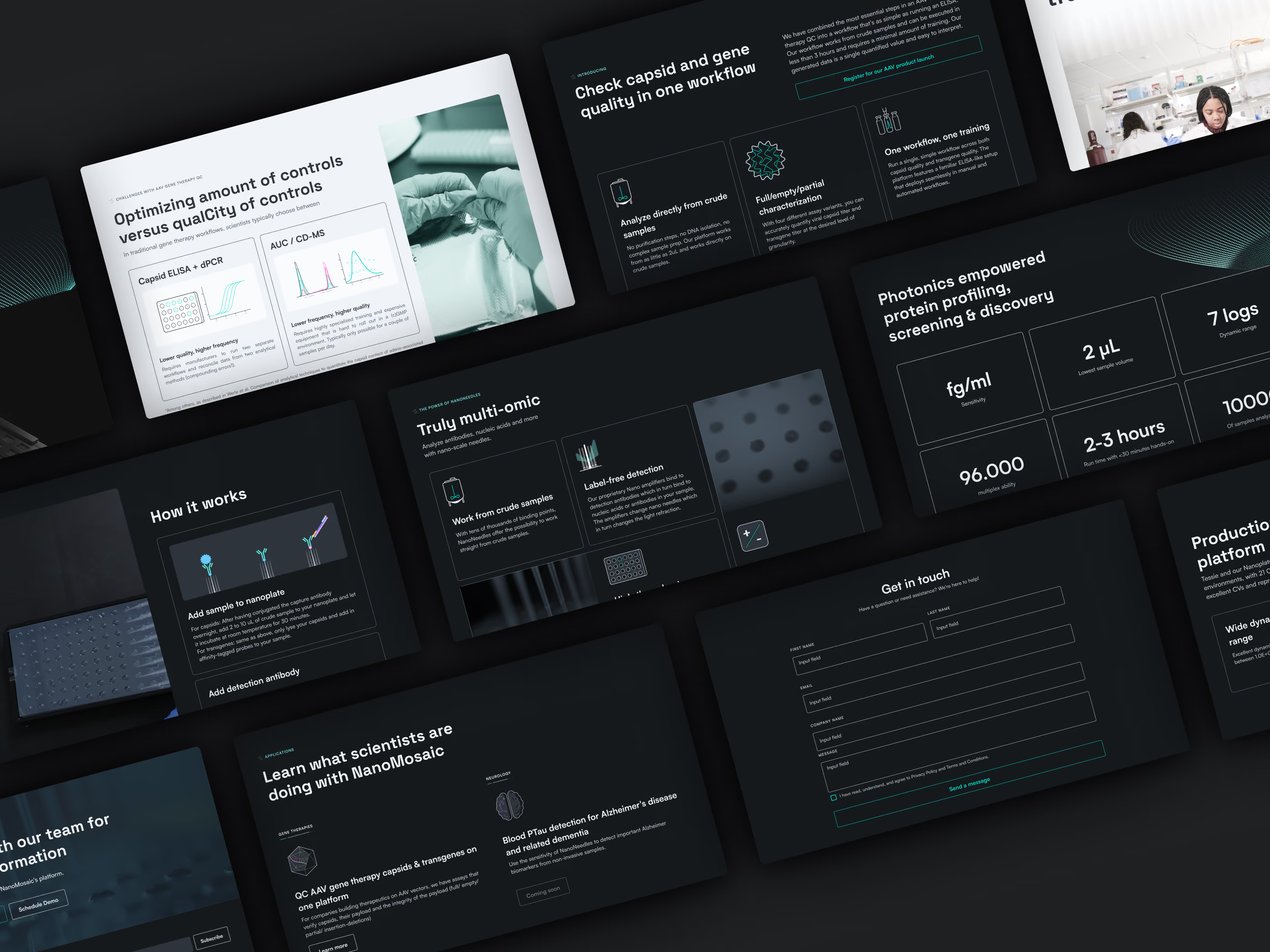
- A messaging hierarchy from platform to proof point: 2 µL of crude sample, capsid and transgene on one plate, results in about three hours, under 10% variation between plates, 21 CFR Part 11 compliant software.
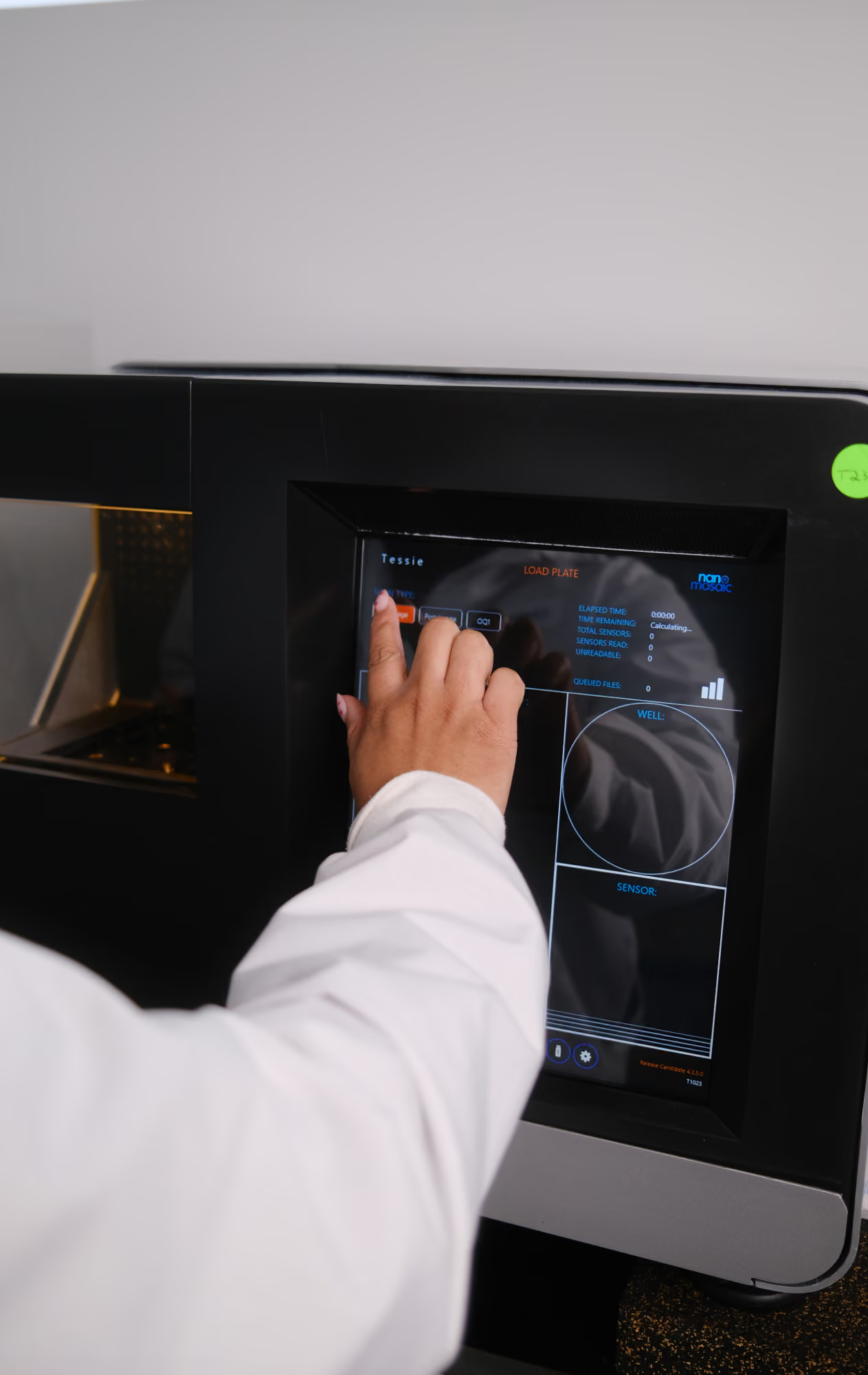
- A brand architecture that named the parts: the Tessie instrument, its software, the assays and the NanoNeedle plates.
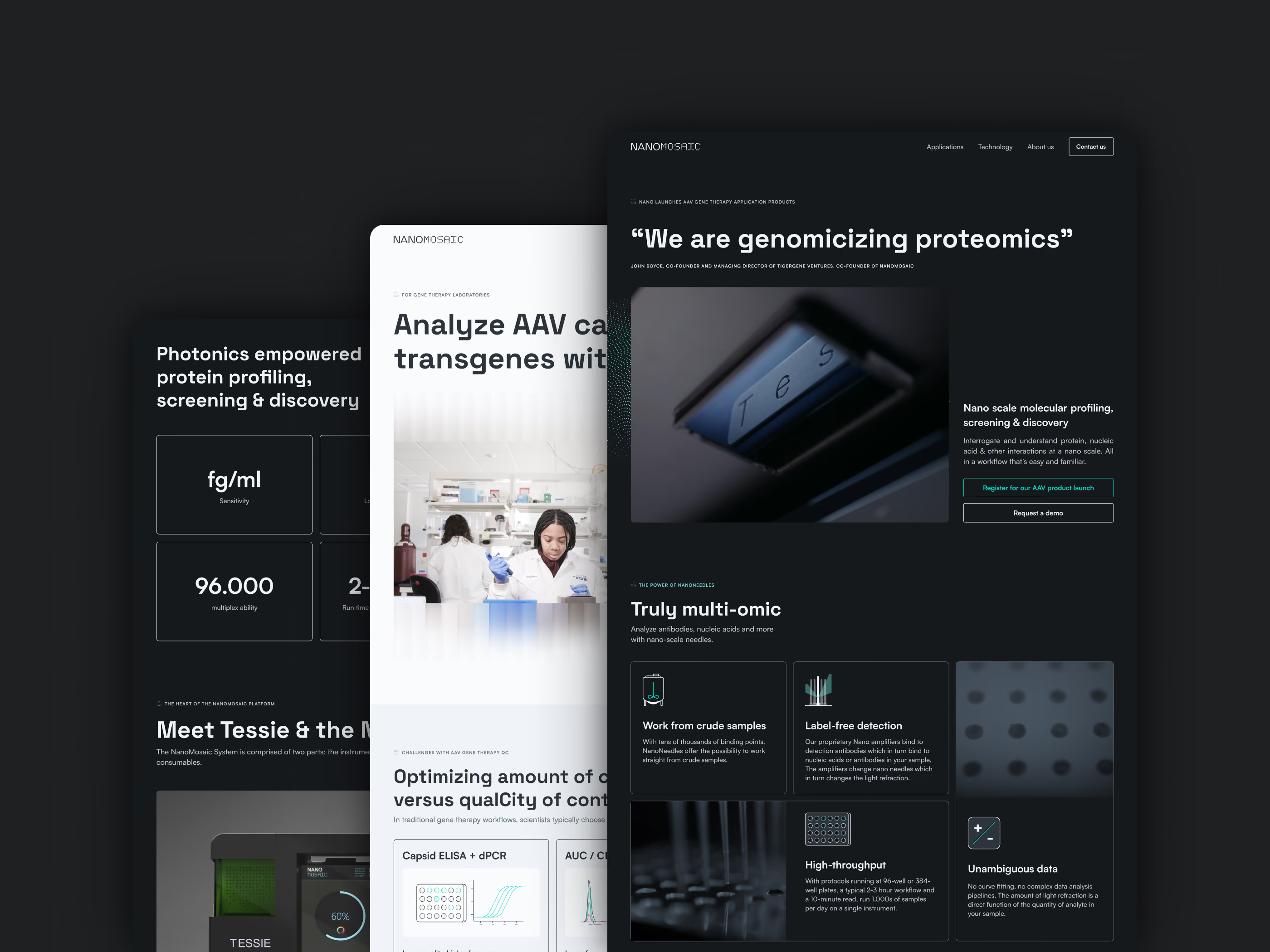
- A refreshed identity with a dot-matrix wordmark, a scientific icon set and nanoneedle-inspired visuals, rolled out across the website, decks, templates and business cards.
Let the data and the experts do the selling
2. Let the data and the experts do the selling
A sceptical audience trusts peers and data, not vendors. So we built the launch around third-party proof.
- Application data from the large-scale AAV manufacturing core at UMass Chan Medical School. Tessie's capsid titres matched ELISA at 86% to 99% across four process stages, from crude lysate to purified vector.
- Application notes, a product brochure, a core scientific deck and illustrations of the capsid and transgene workflows.
- A product video and photoshoot, plus a teaser to warm up the audience before launch.


Launch, then keep the conversations coming
3. Launch, then keep the conversations coming
We sequenced the touchpoints so each one fed the next.
- Digital launch event (March 2024) with Genetic Engineering & Biotechnology News, fronted by NanoMosaic's scientists and the UMass Chan core director: 1,030 leads and 321 live attendees. We cut the recording into 11 chapter clips for sales and social.
- ASGCT annual meeting (May 2024), with a booth and a speaker slot: more than 300 brochures handed out in a day and a half, a record for the sales team.
- Lunch & Learn series (August 2024): 30-minute online demos for lab teams, with lunch delivered to the lab. Gated brochure and application-note downloads on LinkedIn kept the list growing in between.
- Follow-up sequences in HubSpot that routed engaged leads to sales and turned them into 50+ product demos within six months.

Demand that outran the sales team
Within weeks of launch, inbound demand exceeded what NanoMosaic's sales team could handle. Six months in, the scorecard read:
From launch agency to growth partner
The launch gave NanoMosaic a story, a brand and a lead engine. The next two years put that engine to work.
- Data in front of the right readers. NanoMosaic published a white paper with a top-10 pharma partner on nanoneedle-based assessment of AAV product quality. We emailed it to 1,039 contacts at 99.4% delivery, gated it on the website and added it to every employee's email signature. An automated sequence followed up each download, and paused for anyone already talking to sales.
- Outreach that reads the literature. We built a list of about 1,000 first and last authors whose recent papers used ddPCR or qPCR, the methods Tessie replaces. Personalised emails drew a 10% to 15% reply rate, against a 5% benchmark for cold outreach, and booked dozens of demos.
- A website that keeps up with the data. In 2026 we are refreshing the site with new case studies, a 20-question FAQ and use-case pages built for search and AI answers, alongside automated prospecting to turn dormant leads into opportunities.
Our roles
Launch into the category, not the crowd.
Ooho turns a platform with many possible markets into one story buyers act on, then builds the pipeline behind it.