

ChatGPT Ads for Life Sciences: Reach, Cost and Whether to Test
ChatGPT Ads just launched across Europe, reaching a billion weekly users who ask things like which CRO offers high-throughput epitope binning on Biacore or Carterra LSA. Here's who sees them, what a test costs, and what you learn either way.

ChatGPT Ads reach a billion weekly users and just launched across Europe. Most of your buyers will never see one. Here is what that means for a life-science marketer, and why the test is still worth running.
________________________________________________________________________________________________________________________________
Key takeaways
- ChatGPT Ads appear below an answer and are matched to the conversation. There are no keyword lists, negatives or demographic filters.
- Only Free and Go users see them. Plus, Pro, Business, Enterprise and Edu accounts stay ad-free.
- The reach is still large, because many scientists research on personal accounts and early researchers are the least likely to pay for ChatGPT themselves.
- Ads run separately from organic citations. They add a second placement on the screen where your brand may already be cited.
- Budget €3.000 to €5.000 in media over four weeks for a first test, and use it to learn which message and application buyers respond to.
ChatGPT Ads are sponsored placements that appear below a ChatGPT answer, matched to the conversation rather than to keywords. Only Free and Go users see them, which excludes most paid enterprise seats but still covers the vast majority of the platform's roughly one billion weekly users, including many scientists and clinicians researching on personal accounts.
What are ChatGPT Ads?
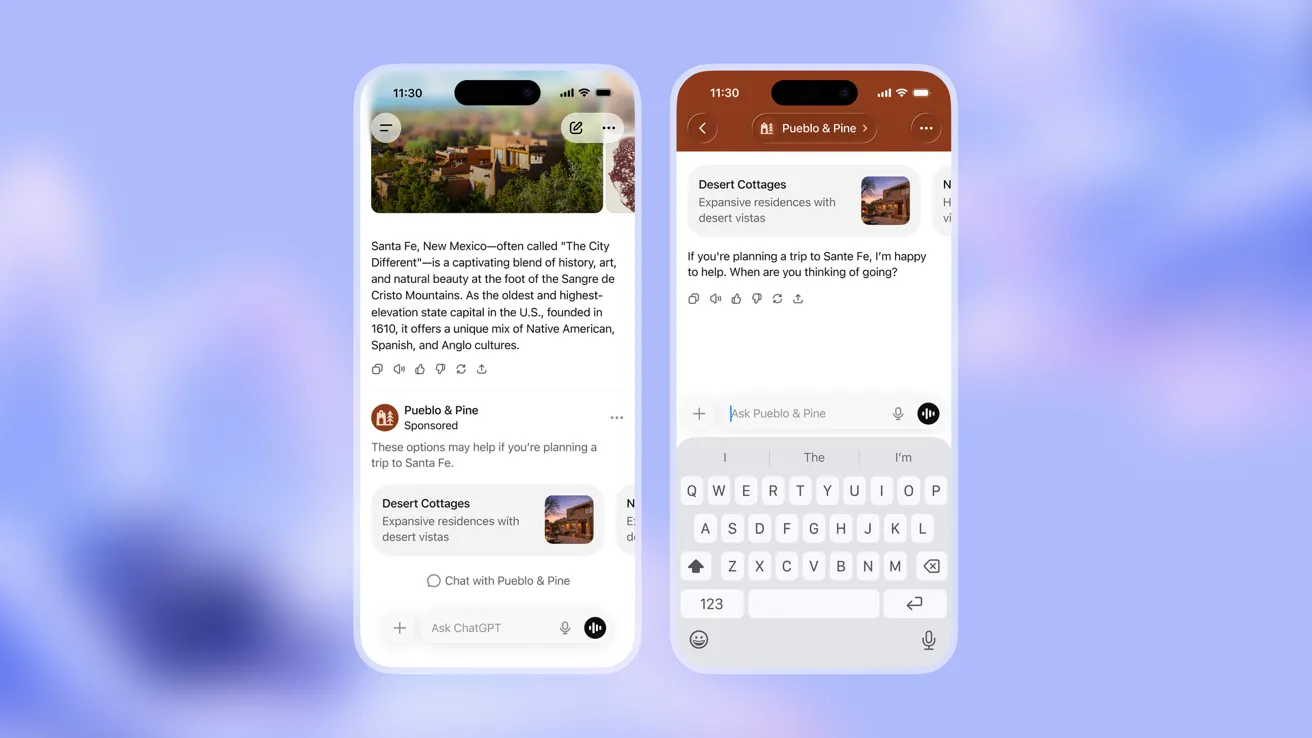
A ChatGPT Ad is a sponsored placement that appears below a chat response, clearly separated from the organic answer. Advertisers buy the card, not the citation.
Unlike traditional search advertising, relevance is not based purely on keywords. Ads are matched to the context and intent of the conversation, plus your landing page and your ad copy. Where a user has left ad personalisation on, past conversations and previous ad interactions feed in as well.
For a life-science company, that means showing up around conversations like:
- "What should I consider when selecting a CDMO?"
- "What is the best method for high-throughput single-cell analysis?"
- "Which CRO provides high-throughput epitope binning and mapping using SPR (Biacore) or Carterra LSA platforms?"
- "Which technologies can improve antibody discovery?"
- "How can we scale cell therapy manufacturing?"
Closer to what buyers actually ask than any keyword list.
What can you control?
Targeting on ChatGPT Ads is deliberately broad. What you can set:
- Geography. Country level across Europe. State, DMA and postcode targeting in the US.
- Custom audiences. Matched email or phone lists, from 25.000 matched users up.
- Platform. iOS app, Android app or web.
- Context hints. Broad thematic guidance, set at ad-group level.
No keyword lists, no negatives, no demographics, no lookalikes. Broad by design, so your landing page and your copy do more of the qualifying work than they would on search.
Who sees the ads?
Only users on the Free and Go plans see ads. Plus, Pro, Business, Enterprise and Edu stay ad-free. A share of professional life-science buyers will never see them. Ads are also ineligible next to sensitive or regulated topics, personal health included, which closes off part of the query space for clinical and patient-facing messaging. Keep that constraint in mind when you scope which questions a test can actually reach.
So why should a life-science company test this at all?
The pool is enormous. ChatGPT passed 1 billion weekly users in July 2026, roughly 80% of them on free plans. The reachable audience still dwarfs any other channel in B2B life sciences.
Your buyer often has two accounts. Corporate AI policy restricts the enterprise seat, or the scientist would rather not log an exploratory query against a work account. Scientists, clinicians and commercial teams often research work questions on personal accounts and devices.
The early researcher is rarely the signer. "Best droplet digital PCR platform for low-input samples" gets typed by a postdoc or an associate scientist long before procurement is involved. That group is the least likely to pay $20 a month personally, and among the most likely to shape the shortlist.
Academic and emerging markets skew free. Sell into university labs, public institutes or CROs outside Western Europe and North America and the tier limit barely bites.
What do you learn beyond conversions?
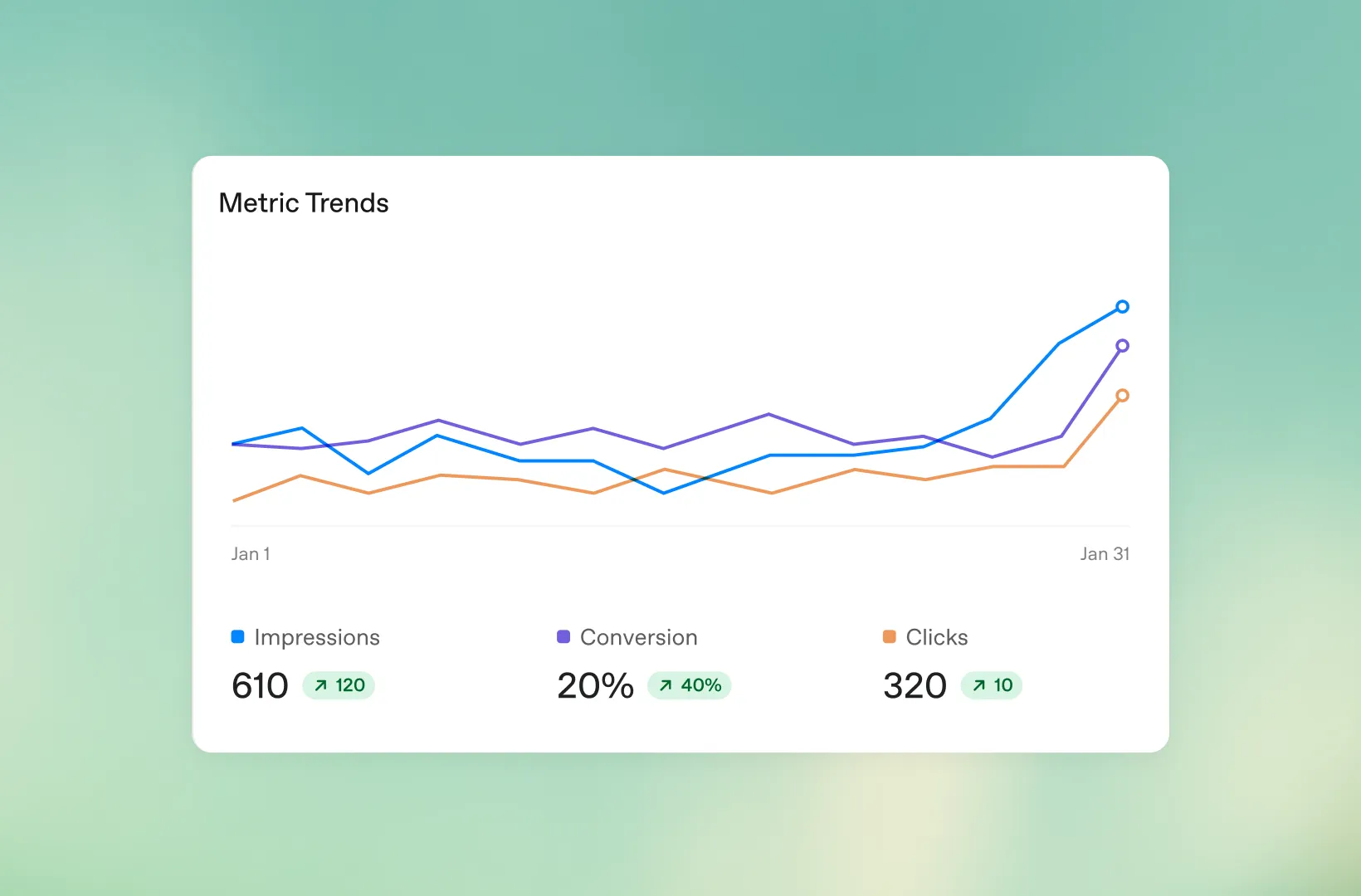
A ChatGPT Ads test also returns data on what buyers want to know before they buy, beyond the leads it generates. You can put several problems, use cases, comparison angles and propositions in front of live intent and see which application draws interest, which comparison gets clicked, and whether the audience responds to workflow efficiency, scientific performance or economic value.
Those answers feed your AEO strategy, scientific content roadmap, website messaging, LinkedIn campaigns, paid search and sales enablement. The media does not only buy leads. It buys market feedback, and that part of the return survives a test that fails on cost per lead.
Do ChatGPT Ads help your AEO?
Many life-science companies already invest in Answer Engine Optimization: the content and authority signals that make ChatGPT more likely to cite them. Ads are a separate system. Buying a card does not make ChatGPT quote your page more often.
What ads add is screen real estate. Appear organically in an answer and hold the sponsored placement underneath it, and you own more of the conversation around a buying question that matters.
It works in reverse too. If you have spent a year becoming the organic authority on a topic, a competitor can now buy the placement around that same intent. Worth protecting your position before they take it.
What do ChatGPT Ads cost?
Three buying models as of September 2026:
- CPM, default maximum bid $60
- CPC, recommended starting maximum bid $3 to $5
- oCPC, billed per click and optimised toward conversions, no published bid guidance
There is no platform minimum spend. There are no published benchmarks either: OpenAI has released no cross-advertiser figures for click-through rate, conversion rate or cost per acquisition, so take any "ChatGPT Ads benchmark" you read elsewhere with a grain of salt.
For most life-science companies we recommend €3.000 to €5.000 in media over four weeks. Enough to test several intent areas and messages, and to see whether there is a signal worth pursuing.
Running ChatGPT Ads with Ooho
For Ooho clients we connect the test to the go-to-market work already running across AEO, SEO, LinkedIn, paid search, email, content and the website.
We build the ads off your existing positioning and scientific content, align targeting with the audiences we are already developing, set up measurement before the spend starts, and feed what we learn back into the wider campaign.
Ready to explore ChatGPT Ads? Get in touch and we will look at it with you.
ChatGPT Ads FAQ
Are ChatGPT Ads available in Europe?
Yes, ChatGPT Ads are available in Europe. They launched across 31 European markets (EU27 plus Iceland, Liechtenstein, Norway and Switzerland) in late August 2026. Access still depends on category and policy review.
Can you target keywords in ChatGPT Ads?
No, you cannot target keywords in ChatGPT Ads. Matching is based on conversational context and intent, not keyword lists, and you give broad thematic hints at ad-group level instead.
Do Plus and Enterprise users see ChatGPT Ads?
No, Plus and Enterprise users do not see ChatGPT Ads. Only Free and Go accounts do; Pro, Business and Edu stay ad-free too.
Will ChatGPT Ads improve my AI search visibility?
No, ChatGPT Ads do not improve AI search visibility. Paid placement and organic citation are separate systems: ads give you a second position on the same screen, not a higher citation rate.
What should a first ChatGPT Ads test cost?
A first ChatGPT Ads test should cost €3.000 to €5.000 in media over four weeks, plus tracking setup. There is no platform minimum spend.
Are ChatGPT Ads allowed for medical or health topics?
No, ChatGPT Ads are not eligible to appear near sensitive or regulated topics, including personal health and mental health. Life-science companies should expect parts of their query space to be unavailable.
Let’s get in touch.
We build brands that make your science impossible to overlook, and worth more once it’s understood. Let’s talk about your rebrand.